
Prosedyre for arbeid med elektronmikroskop
Prosedyre for arbeid med elektronmikroskop
Formål
Formålet med denne prosedyren er å sikre riktig bruk av elektronmikroskop, samt sikre at strålevernarbeidet ved NTNU er i henhold til myndighetskrav og ivaretar sikkerheten for ansatte, studenter og andre ved NTNU.
Omfang og forankring
Prosedyren gjelder alle enheter, ansatte og studenter ved enheter som bruker elektronmikroskop tilhørende NTNU. Prosedyren er et tiltak for å redusere risikoen ved arbeid med elektronmikroskop.
Retningslinje for strålevern og bruk av strålekilder med styrende for denne prosedyren.
Definisjon
I et elektronmikroskop sendes en elektronstråle fra et filament. Røntgenstråler dannes når elektronstrålen treffer et objekt. Elektronmikroskop brukes i hovedsak til avbildning av objekter og elementsammensetning. Strålen er innkapslet.
Ansvar
Linjeleder
Linjeleder har overordnet ansvar for forsvarlig strålevern ved enheten. Linjeleder skal ivareta oppgaver som beskrevet i Retningslinje for strålevern og bruk av strålekilder.
Linjeleder skal sørge for at det finnes faglig ansvarlige og evt. instrumentansvarlige for enhetens elektronmikroskop, evt inneha denne rollen selv.
Framgangsmåte for arbeid med elektronmikroskop
Lokal strålevernkoordinator
Lokal strålevernskoordinator skal minimum ivareta oppgaver som er beskrevet i Retningslinje for strålevern og bruk av strålekilder.
Elektronmikroskop er meldepliktige i henhold til §13 i Strålevernforskriften
Faglig ansvarlig
Faglig ansvarlig for elektronmikroskop skal minimum ivareta oppgaver som beskrevet i Retningslinje for strålevern og bruk av strålekilder.
Faglig ansvarlig skal i tillegg ved bruk av elektronmikroskop sørge for:
- Vurdere om det er behov for egen instrumentansvarlig for elektronmikroskop, og eventuelt oppnevne instrumentansvarlig (med stedfortreder hvis nødvendig). Faglig ansvarlig skal vurdere om aktuelle personer har kompetanse til å kunne fungere som instrumentansvarlig. Hvis det ikke blir oppnevnt instrumentansvarlig, skal faglig ansvarlig selv ivareta punktene under instrumentansvarlig.
- Informere lokal strålevernkoordinator om alle nyanskaffelser, flytting og avhending av elektronmikroskop.
- Gjennomføre risikovurdering som beskrevet i Retningslinje for strålevern og bruk av strålekilder.
- Påse at alle elektronmikroskop, eller rommet instrumentet står i, har tilstrekkelig merking og skilting.
- Informere utenforstående personer på arbeidsplassen (renholdspersonell, håndverkere og andre) om elektronmikroskopets viktigste egenskaper og faremomenter, renholdsrutiner, betydningen av varselskilt, kontaktinformasjon med mer.
- Gjennomføre regelmessige kontrollmålinger.
- Vurdere om brukere har tilstrekkelig kompetanse til å fungere som autoriserte brukere av enhetens elektronmikroskop
- Sikre elektronmikroskop mot sabotasje, brann og vannskade.
Instrumentansvarlig
Instrumentansvarlig for elektronmikroskop skal minimum ivareta oppgaver som beskrevet i Retningslinje for strålevern og bruk av strålekilder.
Autorisert bruker
Autoriserte brukere skal ha tilstrekkelig kompetanse til at brukeren selvstendig kan vurdere og bruke elektronmikroskopet på sikker måte. Tilstrekkelig kompetanse betyr: Instrumentspesifikk kunnskap om oppstartsprosedyrer, instrumentinnstillinger, sikkerhetsanordninger, avstengning, eventuelle nødprosedyrer, innhold i informasjonsperm, eventuelle strålingsmålinger med mer.
Andre brukere
Kan benytte elektronmikroskopet etter avtale med autoriserte brukere eller instrumentansvarlig
Dokumentasjon
Informasjonsperm
Hvert elektronmikroskop skal ha en informasjonsperm med minimum følgende informasjon:
Generell informasjon
- navn på faglig ansvarlig, eventuell instrumentansvarlig og lokal strålevernkoordinator
- liste over brukere (autoriserte og andre)
- instrumentspesifikk dokumentasjon
- fabrikat, modell, alder, eier, serienummer
- strømstyrker [mA], maksimum toppspenning [kV]
- forskriftsmessig merking
- risikovurdering
- referanser til (eventuelt kopier av) datablader, strålevernbestemmelser og lignende
- referanse til lokal og sentral beredskapsplan
Instruks for brukere
Driftsinstruks for praktisk bruk, sikkerhetsforholdsregler, loggføring, avlåsing, eventuell bruk av strålingsmonitor med mer.
Nødprosedyrer
- prosedyrer bør beskrive hvordan slå av apparatet korrekt, at det ikke er stråling når apparaturen er slått av, tiltak ved stråleskade, kontaktinformasjon, rapportering
- bruk gjerne bilder/figurer i nødprosedyrene
- slå opp nødprosedyrer etter behov: Lokalt, og/eller distribuert til andre (for eksempel vaktmester og renholdspersonell
- Jamfør sentral og stedlig beredskapsplan, DFU10 Ulykke og uhell med strålekilder.
- Prosedyre for beredskap og handling ved uhell eller ulykke med strålekilde
- vurder om nødprosedyrer også skal være på engelsk
Loggbok
Hvert elektronmikroskop skal ha loggbok eller elektronisk logg med:
- Servicearbeid og vesentlige endringer i instrumentoppsett.
- Utførte kontrollmålinger.
Sikkerhet og tekniske krav
Merking og skilting
Elektronmikroskop skal merkes i henhold til kapittel 5 i Arbeidsplassforskriften. Bruk standard skilt for «fare elektrisk strøm» med underteksten «høyspenning livsfare».
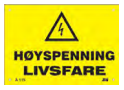
Enkelte elektronmikroskop har ionepumper med magnetiske felt som kan ha uheldig effekt på pacemakere. Slike elektronmikroskop må ha merking som indikerer sikkerhetsavstand for personer med pacemaker. Korrekt sikkerhetsavstand skal være angitt i instrumentets brukermanual.
Merking skal være på norsk, tilsvarende info kan gis på andre språk ved behov.
Fysisk sikring
Alle strålekilder skal sikres mot tyveri, sabotasje, brann- og vannskader. Rom eller områder med elektronmikroskop bør ha adgangsbegrensning. Tekniske tiltak som vanskeliggjør tyveri og sabotasje (for eksempel fastmontering av utstyr) og sikrer mot brann-, vann eller annen type skade må iverksettes. Se også fysisk sikring av strålekilder i Retningslinje for strålevern og bruk av strålekilder.
Kontrollmålinger
I henhold til §24, ledd a) i Strålevernforskriften skal elektronmikroskop være skjermet slik at doseraten på overflaten ikke overstiger 5 μSv/t.
Mål stråledose til nære omgivelser (utenom direktestrålen) rutinemessig minst en gang årlig, etter service og etter vesentlige endringer i instrumentoppsett. Noter resultatene i instrumentets loggbok. Bruk strålingsmonitor tilpasset strålingens egenskaper. Kontakt evt. lokal eller sentral strålevernskoordinator for å få utført slike målinger.
Om prosedyren
| Type dokument | Prosedyre |
| Forvaltes av | HMS-seksjonen |
| Godkjent av | HMS-sjef, 10.09.2021 |
| Sist revidert | |